The CPB Strategic Alignment
Create a predictable, aligned operating model across Commercial, Product, BI, and Engineering.
When Commercial, Product, and BI don’t move together, execution slows down. Not because teams lack capability, but because the system between them isn’t aligned. As automation and AI shorten cycle times and surface cross-functional dependencies faster, misalignment becomes more visible and more costly.
The CPB Strategic Alignment rebuilds how these functions plan, prioritise, collaborate, and deliver, so the organisation can scale with clarity and confidence.
The Results You’ll See
1. One shared prioritisation model everyone trusts
→ No more competing definitions of “priority.” Commercial value, customer impact, technical considerations, BI insight, and effort feed into a single model.
2. Predictable cross-functional delivery
→ Delivery commitments stop slipping. Aligned planning rhythms, clear handoffs, and consistent workflows reduce firefighting and mid-cycle reshuffles.
3. Clear operating agreements between teams
→ Fewer escalations, less noise, more accountability. Everyone understands how decisions get made, who owns what, and how trade-offs are resolved.
4. BI shifts from reactive to proactive
→ Strategy, planning, and measurement finally connect. Insights shape decisions instead of arriving after them, closing the loop between data, strategy, and execution.
5. A scalable operating model for growth
→ Complexity increases without chaos. As headcount increases and product surface area expands, the system holds — instead of breaking.
Who This Is For
If you’re a CEO, COO, CPO, CTO or Senior Leader responsible for strategic alignment across Commercial, Product, BI, and Engineering, the criteria below will help you assess whether this programme is the right fit.
This is a strong fit when:
Commercial → Product → BI operate with different definitions of value
Roadmaps, sales cycles, and planning rhythms don’t line up
Engineering burns cycles on rework or shifting priorities
BI is pulled in late or inconsistently
Cross-functional dependencies regularly delay delivery
Growth has outpaced the operating model
AI/automation surfaces priority conflicts or unclear ownership between functions
Less suitable when:
The organisation is <60–80 people with intentionally fluid roles
You’re seeking a pure product methodology work rather than system alignment
If you’re making the case internally:
This is easy to explain as a way to:
unlock revenue blocked by operational friction
reduce rework and wasted engineering/BI capacity
stabilise delivery and reduce leadership noise
The Problem: When CPB Isn’t Aligned, Execution Becomes Unpredictable
As organisations scale, CPB functions drift apart:
different timelines
different definitions of priority
different inputs and decision logic
different planning cadences
different views of value
These differences create predictable patterns:
stalled revenue opportunities
reshuffled roadmaps
engineering rework
BI reacting instead of informing
teams firefighting instead of delivering
This isn’t a team issue, it’s a system-level one. And system misalignment compounds faster as automation and scaling introduce new interdependencies.
The CPB Strategic Alignment rebuilds that system.
What You Get
Unified prioritisation framework
Cross-functional RACI (responsibility and accountability matrix, including who must be consulted or informed across the business)
Complete operating model (roles, decision paths, collaboration points)
End-to-end workflow across Commercial → Product → Engineering → BI → measurement
Shared planning cadence linking revenue, roadmap, capacity, and forecasting
Aligned Jira/PM tooling that reflects how work should move
Adoption support to embed the model and refine early issues
Prioritisation and workflow foundations that enable automation and AI investment to improve delivery predictability
How It Works
Phase 1 — Understand
Diagnostic across CPB (+ Engineering):
workflows & request paths
roadmap inputs
prioritisation logic
upstream/downstream gaps
dependency patterns
Output: a factual map of where alignment breaks down.
Phase 2 — Redesign
Define how CPB will operate together:
ownership levels
end-to-end workflow
prioritisation model
planning cadence
tooling & intake structure
communication model
Output: a practical, scalable operating system.
Phase 3 — Implement
Roll out and embed:
launch workflows
embed into tools
refine based on real usage
align leadership to sustain the model
Output: a predictable, stable cross-functional delivery system.
Before → After
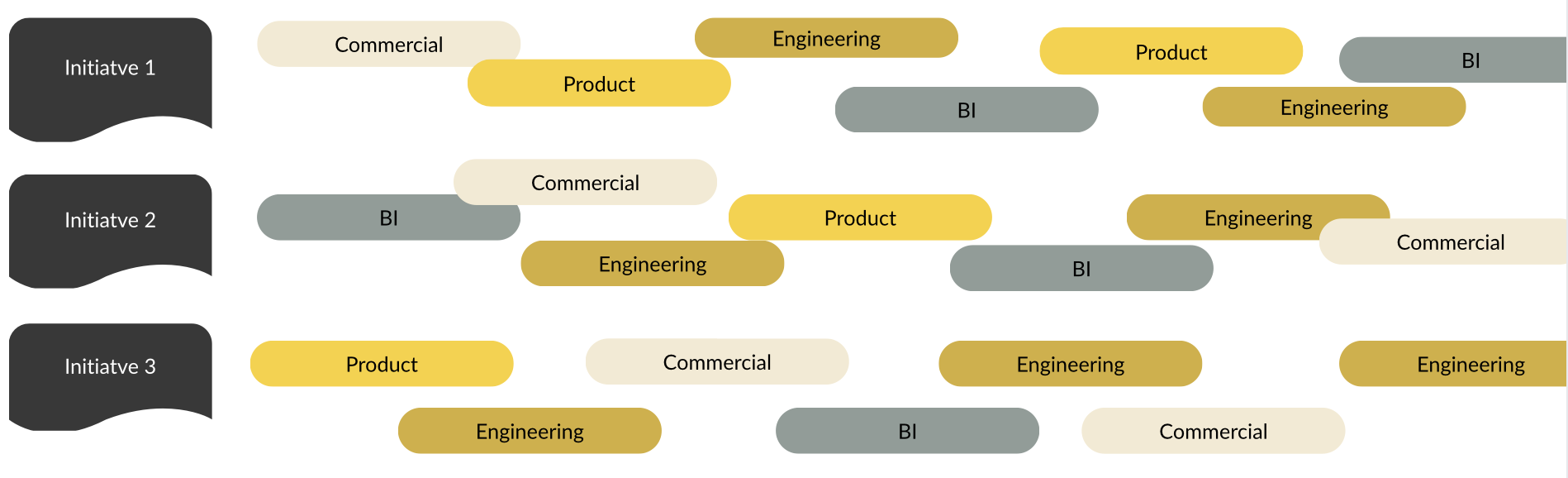
Before
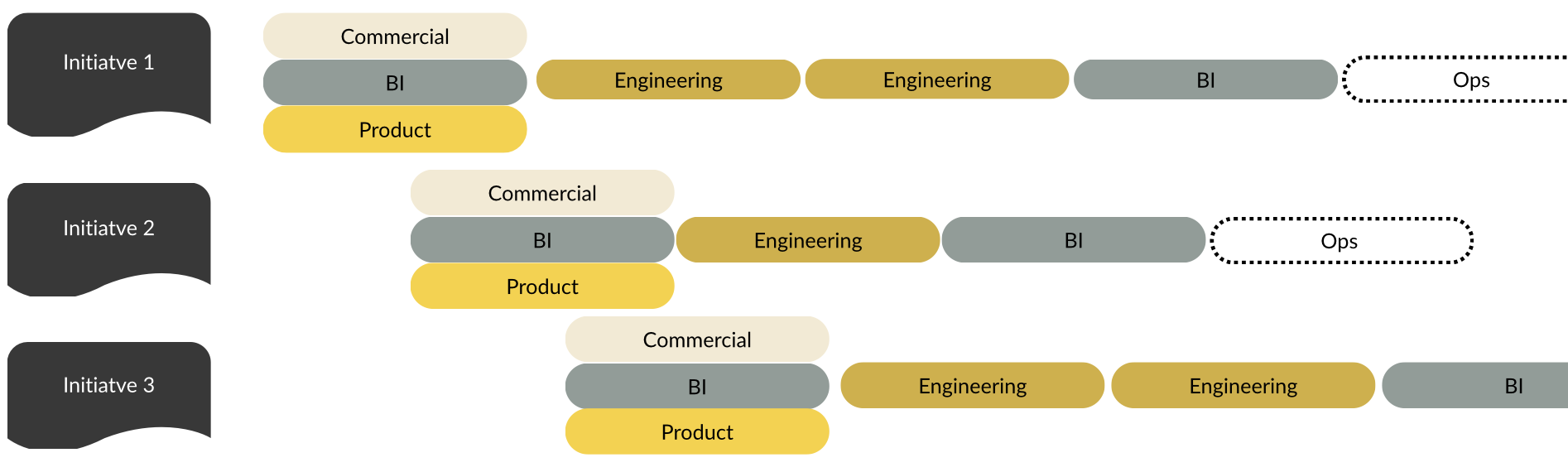
After
Commercial, Product, BI, and Engineering operating on different cadences.
Shared planning cadence across all functions.
Leadership frequent intervention to resolve conflicts
Ownership model that reduces escalations.
Single prioritisation model applied consistently
Each function used its own definition of priority.
BI integrated into prioritisation and planning.
BI involved late in the process.
Stable planning with controlled change points.
Roadmaps constantly changing
Defined handoffs and sequencing across functions.
Dependencies causing delays, blocking progress
Before
After
Result: predictable delivery and fewer cross-functional interruptions.
Next Steps
Introductory call — context, goals, fit
Proposal review — outcomes, structure, timeline
Agreement & onboarding
Kickoff (30–45 mins)
Phase 1 begins
Book an introductory call
To explore whether the CPB Strategic Alignment matches your priorities and timing.